


Disclaimer: machine translated by DeepL which may contain errors.

The author currently works at SPring-8 in Hyogo Prefecture. SPring-8 is a shared research facility that performs various analyses using high-energy X-rays (synchrotron radiation). It is characterized by its ring-shaped building, which spans approximately 1.5 km in circumference.Nearly 10,000 researchers from academic institutions and companies in Japan and abroad visit the facility each year. This article was written at the request of Professor Tatsuya Hirasawa (Department of Earth and Planetary Science), who was visiting the facility.
My research topic while I was a student was the ecological reconstruction of ammonites, a type of fossil organism. Even back then, I used SPring-8 to perform CT scans on fossils, but I never imagined I would end up working here.The turning point came when, as a postdoctoral researcher, I worked on developing imaging technologies for fossils; my interest shifted from the fossils themselves to the methods and infrastructure used to discover and visualize them. Attracted by SPring-8 as a place to generate cutting-edge research data, I applied for a research position and was assigned to a team in the CT scanning field, where I could leverage my previous experience.
Although SPring-8’s CT scanners look very different from the ones found in hospitals, they operate on the same basic principle. However, the samples brought in are diverse, ranging from living organisms, rocks, and fossils to new materials developed by companies, industrial products, civil engineering infrastructure, and even cultural properties.In the team to which I belong, we propose the optimal experimental methods tailored to each user’s objectives and provide support as users operate the equipment. We also conduct research on new technologies to facilitate user access to the system.I am currently developing a system that links the CT scanner with a supercomputer to automate the entire process—from measurement to complex data analysis—in a single, seamless workflow. I also remain actively involved in paleontology through the development of image processing technologies.
If I had to describe my daily work in a single phrase, it would be “team mixed martial arts.” Understanding X-rays naturally requires physics and chemistry, but depending on the sample, knowledge of biology, Earth and planetary sciences, agriculture, engineering, and the humanities is also necessary.Precise control of the equipment to obtain high-resolution data requires electrical and mechanical engineering; processing X-ray images into CT images requires mathematics; and large-scale data processing requires computer science. Even art may be necessary when visualizing CT data in 3D.The research backgrounds of our staff, including myself, are diverse. We overcome the challenges of this “match”—where all manner of academic disciplines intersect and clash—through teamwork. It often turns into a grueling, long-term battle. However, I also find it fascinating to be literally in the ring at the moment a new discovery is made.
I imagine many people feel anxious about choosing a research career—especially in niche fields—wondering how they can apply the high level of expertise gained through research to their own careers. While there may be a perception that a research career involves specializing deeply in a specific topic, there are also research positions where deep expertise and well-rounded skills coexist.I hope this article will serve as a helpful reference for those struggling with career decisions.
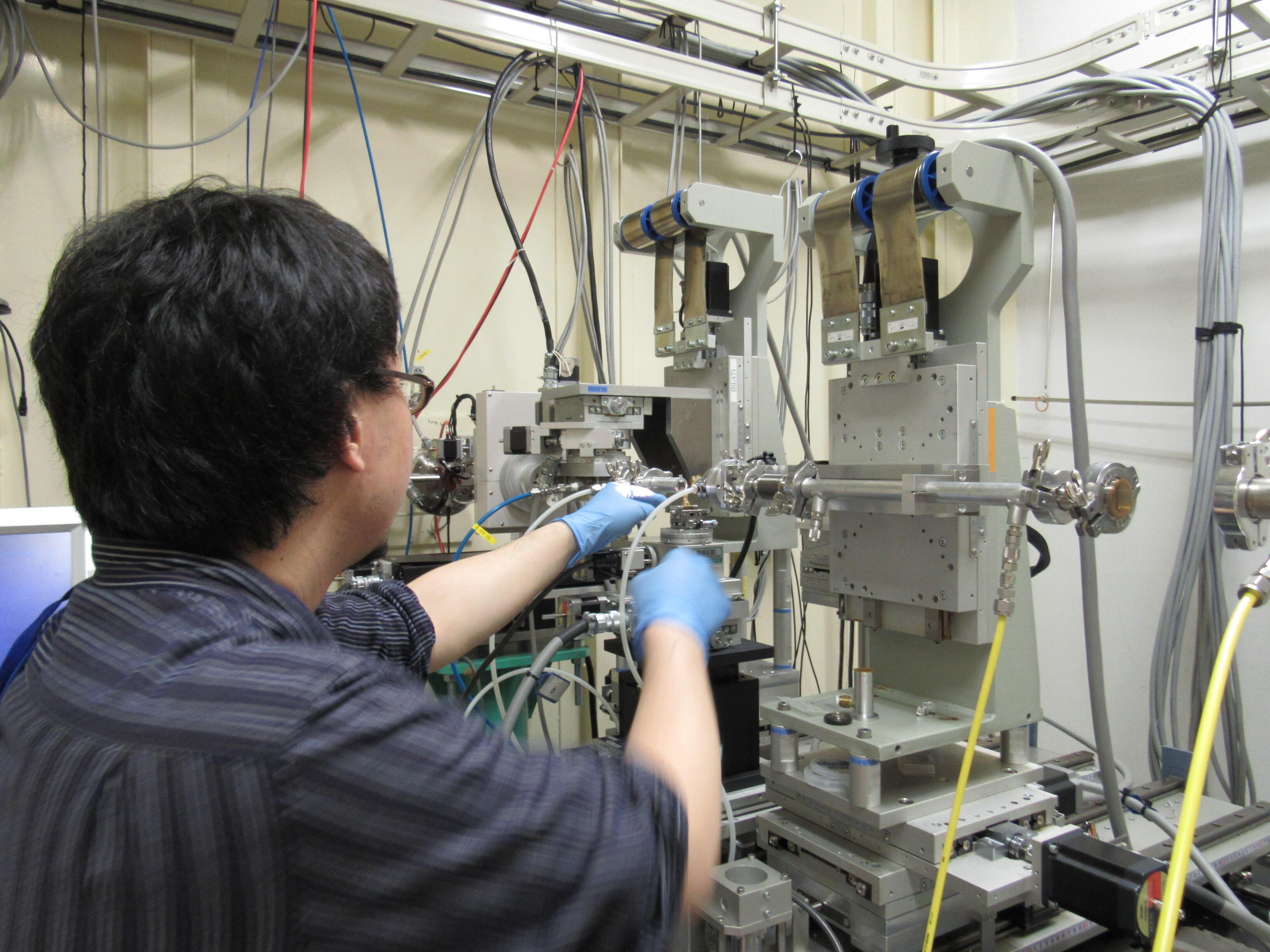 The author during his doctoral studies (2016), when he never imagined he’d be working here 10 years later