A Message from the Dean
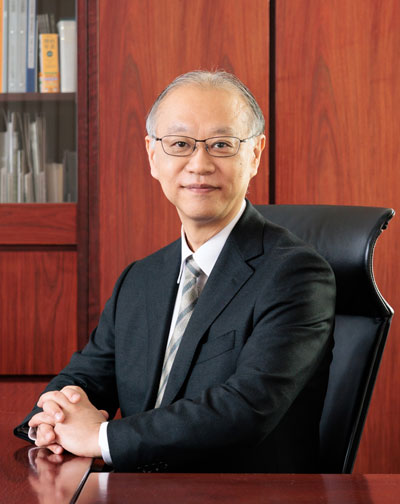
Prof. TAJIKA Eiichi,
Dean of the School of Science
Science is the scholarly pursuit of the principles that govern the natural world around us, and it lies at the heart of the natural sciences. Rooted in humanity’s fundamental intellectual curiosity, it seeks to understand natural phenomena and the laws of nature through disciplines including mathematics, physics, chemistry, biology, and the Earth sciences. The simple desire “to know” lies at the foundation of scientific inquiry. Through this pursuit, science deepens our understanding of universal truths, advances the systematic development of knowledge, and has played a central role in shaping humanity’s view of the world. Science is not pursued primarily for immediate practical benefit. Yet the knowledge generated through scientific inquiry has, over time—and often in unexpected ways—made profound contributions to the development of industry and society. By applying such knowledge in diverse ways, humanity has built the foundations of modern civilization.
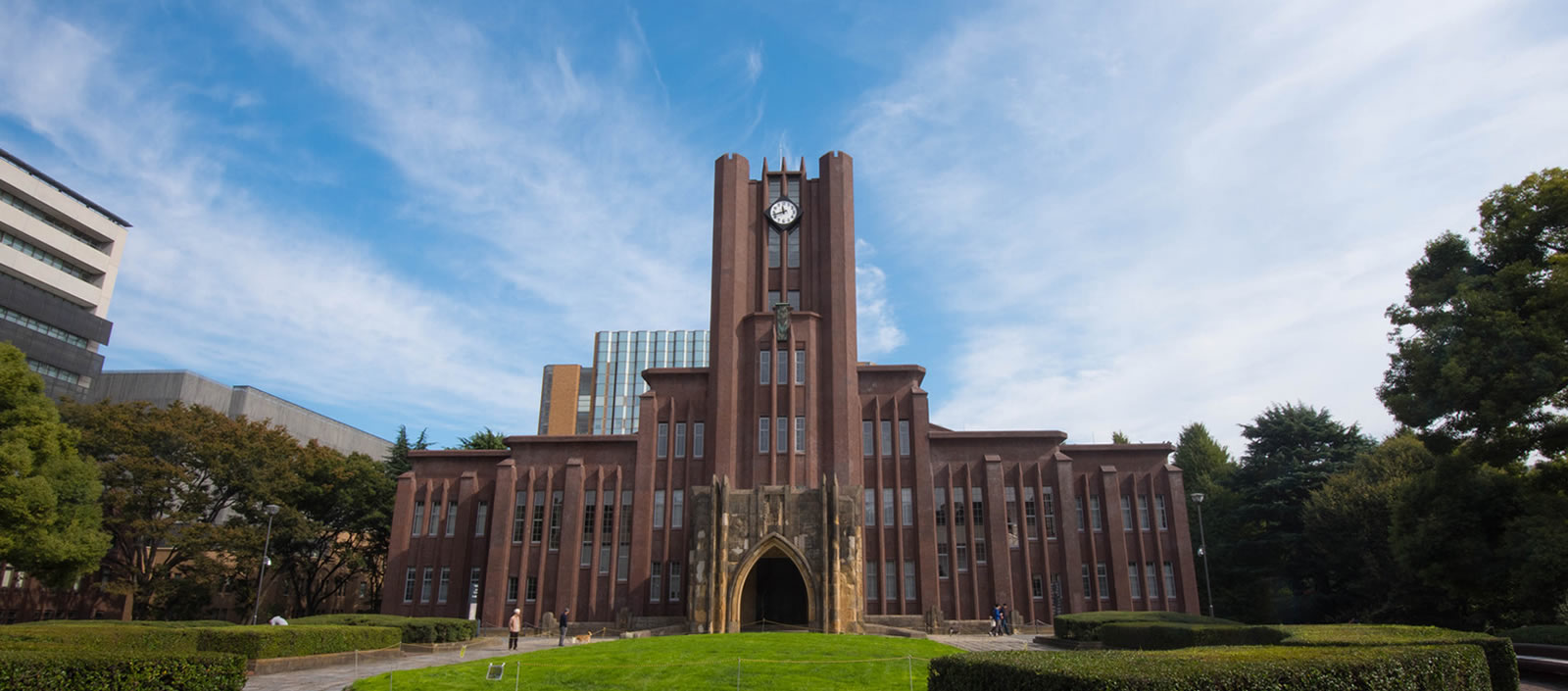
The University of Tokyo was founded in 1877, and the Faculty of Science was one of the four faculties established at its inception, together with the Faculties of Law, Letters, and Medicine. The Faculty of Science comprises ten departments: Mathematics, Information Science, Physics, Astronomy, Earth and Planetary Physics, Earth and Planetary Environmental Science, Chemistry, Biophysics and Biochemistry, Biological Sciences, and Bioinformatics and Systems Biology. The Graduate School of Science includes five departments: Physics, Astronomy, Earth and Planetary Science, Chemistry, and Biological Sciences. Together, the Graduate School of Science and the Faculty of Science encompass the major disciplines of science and pursue research and education at the forefront of the international scientific community.
Science also has the power to transform humanity’s understanding of the world and to inspire a sense of wonder about our place in the universe. Questions concerning the origins and evolution of the universe and of life provide particularly compelling examples. The discovery of exoplanets, for instance, has profoundly changed our view of the universe. Planetary systems like our own Solar System are now known to exist widely across the universe. Around the world, observational studies and future missions aimed at detecting possible signs of life in the atmospheres of exoplanets are actively being pursued. Such scientific quests—capable of transforming our understanding of the universe—represent one of the most fascinating aspects of science.
At the same time, many of the transformative technologies that support modern society ultimately trace their origins to fundamental scientific research. Lasers, semiconductors, magnetic resonance imaging (MRI), mRNA vaccines, and artificial intelligence all emerged from basic research whose practical applications were not initially evident. Emerging technologies such as quantum computing and fusion energy likewise depend on advances in fundamental science. These examples remind us that even when its immediate usefulness is not apparent, basic scientific research can prove to be of immense importance over the long term.
History shows that many discoveries that have transformed the world were born from the bold ideas and boundless curiosity of young researchers. At the Graduate School of Science and the Faculty of Science, our foremost priority is to maintain an environment in which the next generation of researchers can pursue new questions freely—without fear of failure and unconstrained by precedent. Nurturing students and young scholars who may one day achieve breakthroughs capable of transforming humanity’s understanding of the world is one of our most important missions.
The year 2027 marks the 150th anniversary of the founding of the University of Tokyo and its Faculty of Science. Over the past 150 years, the Graduate School of Science and the Faculty of Science have produced numerous outstanding researchers, including Nobel laureates, as well as talented graduates who have made significant contributions across diverse sectors of society. Guided by the principles set forth in the Charter of the School of Science, University of Tokyo (established in 2002)—“Mission,” “Education,” “Fairness and High Standard,” “Non-discrimination,” and “Social Contribution”—we will continue to pursue education and research of the highest international standards. At the same time, we remain committed to advancing international collaboration and promoting the values of diversity, equity, and inclusion, while continuing to explore the mysteries of nature and expand the frontiers of human knowledge.