


DATE2026.05.27 #Press Releases
Role of Zooplankton in Marine Ecosystem Iron Cycles
Disclaimer: machine translated by DeepL which may contain errors.
-A New Picture of the Marine Food Web Opened up by Iron Stable Isotope Ratios by Species-
Summary
D. from the Graduate School of Medicine, Hokkaido University, Associate Professor Takaaki Itai and Professor Yoshio Takahashi from the Graduate School of Science, The University of Tokyo, Lecturer Minako Kurisu from the Atmosphere and Ocean Research Institute, The University of Tokyo, Professor Kazutaka Takahashi and Associate Professor Taketoshi Kodama from the Graduate School of Agricultural and Life Sciences, The University of Tokyo, and others The group clarified the role of zooplankton in the iron cycle of marine ecosystems in the open ocean using the iron stable isotope ratio.
In this study, the iron stable isotope ratios of zooplankton, which have been poorly measured in previous studies, were observed for the first time in the world by applying a trace stable isotope ratio analysis method using the double-spike method to iron concentrations and iron stable isotope ratios for each plankton species. In previous studies, iron dynamics have been discussed using bulk samples collected in plankton nets, but the results of this study indicate that the iron requirements of zooplankton separated by species are lower than those of bulk samples and also have significantly lower iron stable isotope ratios (Figure 1). While it has been noted that open ocean primary biological production is often iron-limited, the results of this study provide an important avenue regarding iron dynamics linking seawater and fish.
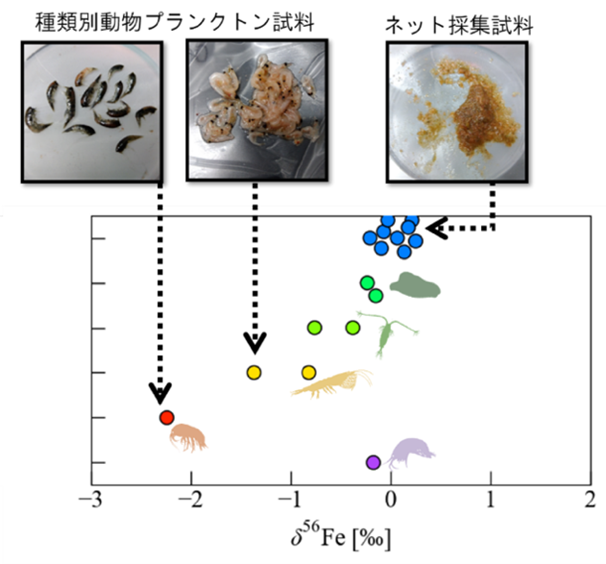
Figure 1: Iron stable isotope ratios ( δ56Fe ) of net-collected samples (bulk) and species-specific zooplankton
Publication Information
| Journal name | ACS ES&T Water |
|---|---|
| Title of Paper |
Bulk Net Zooplankton Samples Mask Species-specific Iron Isotope Signatures
|
| Author(s) | Nanako Hasegawa, Minako Kurisu, Kazutaka Takahashi, Taketoshi Kodama, Kotaro Hirayama, Yuta Ijichi, Teruhiko Kashiwabara, Yoshio Takahashi, Takaaki Itai Takaaki Itai |
| DOI | 10.1021/acsestwater.5c01137 |