


DATE2026.03.19 #Press Releases
Discovery of the “Cradle” of light-induced phase transitions!
ーWorld’s first simultaneous ultrafast monitoring of X-ray absorption spectroscopy and X-ray diffraction spectroscopyー
Key Findings
- Using an X-ray free-electron laser, the authors constructed a system capable of simultaneously performing ultrafast monitoring of X-ray absorption spectroscopy and X-ray diffraction spectroscopy under light irradiation and conducted the world’s first demonstration experiment.
- In the light-induced charge-transfer phase transition of rubidium-manganese-cobalt-iron Prussian blue, the authors revealed that an reverse Jahn-Teller distortion occurs just 50 femtoseconds (fs) after light irradiation, followed by a charge transfer at 190 fs, and then the formation of a charge-transfer polaron—a localized distortion of the lattice associated with the transferred charge—at 2.1 picoseconds (ps).
- These findings demonstrate that a charge-transfer polariton acts as a “cradle for phase transitions,” self-amplifying and inducing phase transitions throughout the entire crystal. This provides important guidance for the design of next-generation memory and photonic device materials whose functions are controlled by light.

Schematic diagram showing how light-induced strain propagates throughout the crystal
Overview
Professor Shin-ichi Ohkoshi of the Graduate School of Science at the University of Tokyo, Professor Eric Collet and Dr. Marco Cammarata of University of Rennes, and Professor Hiroko Tokoro of University of Tsukuba, a research team from the CNRS International Research Laboratory DYNACOM (Dynamical Control of Materials) (Note 1), in collaboration with the SLAC National Accelerator Laboratory in the United States and the European Synchrotron Radiation Facility, developed the world’s first system to perform ultrafast simultaneous monitoring of X-ray absorption and X-ray diffraction under light irradiation using an X-ray free-electron laser (Note 2).The experiment utilized an analogue of rubidium-manganese-iron Prussian blue, RbMn[Fe(CN)6] (Note 3), specifically Rb0.94Mn0.94Co0.06[Fe(CN)6]0.98∙0.2H2O, which is known to undergo a photoinduced charge-transfer phase transition at room temperature, in which electrons move between metal ions upon light irradiation, causing irreversible changes in magnetism and color. Using the newly developed measurement system, the team determined that a reverse Jahn-Teller distortion of Mn3+ occurs just 50 femtoseconds after light irradiation; that charge transfer from Fe2+ to Mn3+ occurs at 190 femtoseconds; and that a charge-transfer polaron (Note 4) is generated at 2.1 picoseconds. The authors have identified a sequence of processes in which this charge-transfer polaron—which can be described as a “cradle”—exerts internal pressure within the crystal, triggering a chain reaction of electron transfer that ultimately induces a phase transition throughout the entire crystal. This sequence of events, from the quantum mechanical process of optical excitation to the phase transition, has been elucidated chronologically for the first time.These findings provide crucial insights into the fundamental principles of light-induced control of material properties and are expected to significantly contribute to the establishment of design guidelines for materials aimed at applications such as optically writable memory, optical switching devices, and photonic and quantum devices.
Content of the Findings
Light is a powerful external stimulus capable of controlling the physical properties of materials — such as color, magnetism, and electrical conductivity—on an extremely short timescale of less than one trillionth of a second, and it is attracting attention as a foundational technology for next-generation optical devices and quantum functional materials. In particular, “light-induced phase transitions,” in which the state of the entire material changes in response to light irradiation, are important phenomena with anticipated applications in optical memory and optical switching devices. However, the detailed mechanisms—on the femtosecond timescale—of how quantum mechanical electronic excitations induced by light evolve into changes in crystal structure and thermodynamic phase transitions had not been clarified until now. This is because it has been extremely difficult to simultaneously capture, using a single experimental method, both the ultrafast phenomena at the electronic and atomic levels and the concerted structural changes of the entire crystal as they proceed through multiple stages in both time and space.
A research team led by Professor Shin-ichi Ohkoshi (Graduate School of Science, The University of Tokyo), Professor Eric Collet (University of Rennes), Dr. Marco Cammarata (University of Rennes), and Professor Hiroko Tokoro (University of Tsukuba) at the CNRS International Research Laboratory DYNACOM (Director: Shin-ichi Ohkoshi, Vice Director: Eric Collet) have, for the first time in the world, established a method to simultaneously monitor X-ray absorption spectroscopy and X-ray diffraction with femtosecond resolution under light irradiation by utilizing a laser at Stanford University that generates ultrashort X-ray pulses (Figure 1). In this study, the team focused on Rb0.94Mn0.94Co0.06[Fe(CN)6]0.98 ∙0.2H2O, a type of rubidium-manganese-cobalt-iron Prussian blue RbMn[Fe(CN)6], which is known as a photo-responsive material and exhibits significant volume and symmetry changes in response to changes in its electronic state, and succeeded in directly observing the entire process leading to the photoinduced phase transition.
The experimental results revealed that, just 50 femtoseconds after light irradiation, the electronic energy levels of the Mn³⁺ ion changed, causing a transition from a vertical Jahn-Teller distortion (Note 5) to a flat Jahn-Teller distortion (reverse Jahn-Teller (Note 5)). Subsequently, at 190 femtoseconds, electrons flow from the Fe2+ ion to the Mn3+ ion, changing the charge state from –Mn3+–N≡C–Fe2+– to –Mn2+–N≡C–Fe3+–. It was revealed that this –Mn2+–N≡C–Fe3+– forms a “charge-transfer polaron” in a localized electron-lattice coupling state within 2.1 picoseconds (Fig. 2). This charge-transfer polaron can be considered the “cradle” of the photoinduced phase transition. It was found that the charge-transfer polaron induces significant strain in the crystal lattice, thereby generating internal pressure and causing the charge-transfer phase to grow on a timescale of tens of picoseconds (Fig. 3). It was revealed that as this strain propagates in a concerted manner, charge transfers occur successively, leading to a self-amplifying phase transition, and ultimately causing the entire crystal to transition to a new phase.
This study is the first to fully elucidate, along the time axis, the dynamics of ultrafast light-induced phase transitions — revealing that they are not a single, instantaneous phenomenon, but rather a stepwise and concerted progression of electronic excitation, local structural changes, elastic strain, and phase nucleation and growth. In particular, the novel concept that charge-transfer polarons—which can be described as cradles generated by light—function as a source of internal pressure and drive the phase transition of the entire crystal was previously unrecognized and represents a crucial insight for understanding the fundamental principles of photoinduced phase transitions.
These findings are expected to contribute significantly to the establishment of material design guidelines for applications such as optically programmable memory, optical switching devices, and photonic and quantum devices. Furthermore, by extending this research to various optically functional materials, the realization of technologies that “freely manipulate matter with light” is expected to be further accelerated.
These research findings will be published online in Nature Materials at 7:00 PM JST on Thursday, March 19, 2026.
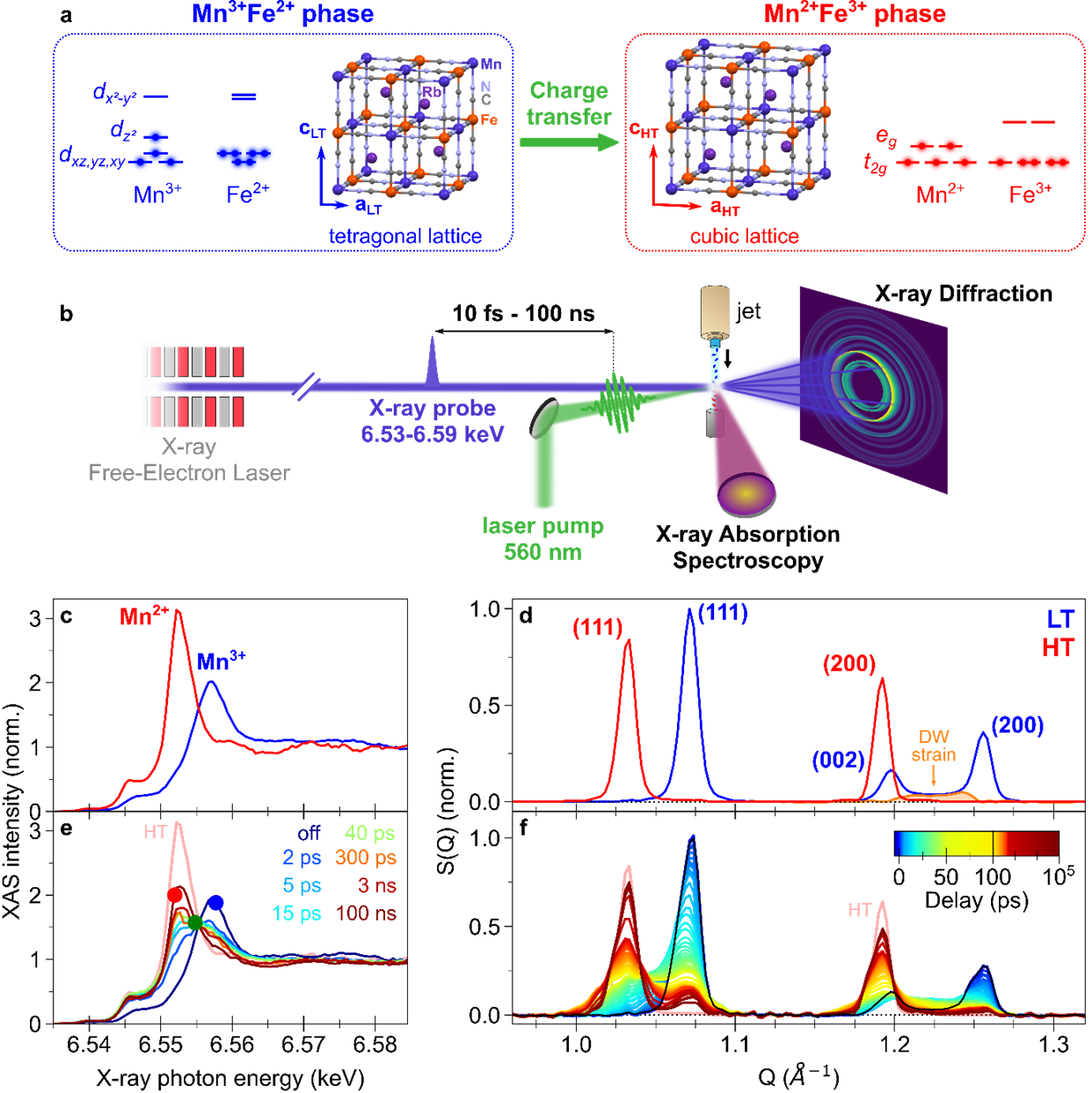
Figure 1: Photoinduced phase transitions in the bistable region of rubidium-manganese-cobalt-iron Prussian blue (Rb0.94 Mn0.94Co0.06[Fe(CN)6]0.98·0.2H₂O
(a) Electronic configuration and crystal structure in the Mn3+–Fe2+ phase (LT phase) and the Mn2+–Fe3+ phase (HT phase) (Note 6). (b) A combined time-resolved X-ray absorption spectroscopy/X-ray diffraction measurement system using a sample flow. (c) Time-resolved X-ray absorption spectroscopy spectra of the LT phase and HT phase at the Mn K-edge (Note 7), and (d) X-ray diffraction patterns. (e) Time-resolved X-ray absorption spectroscopy spectra at different time delays following photoexcitation at 560 nm (10.0 mJ cm−2). (f) Time-resolved X-ray diffraction pattern after optical excitation (color scale, 16.8 mJ cm−2) and the diffraction pattern in the initial state (black line). In (e) and (f), the X-ray absorption spectroscopy and X-ray diffraction patterns of the HT phase are shown in light red for reference.
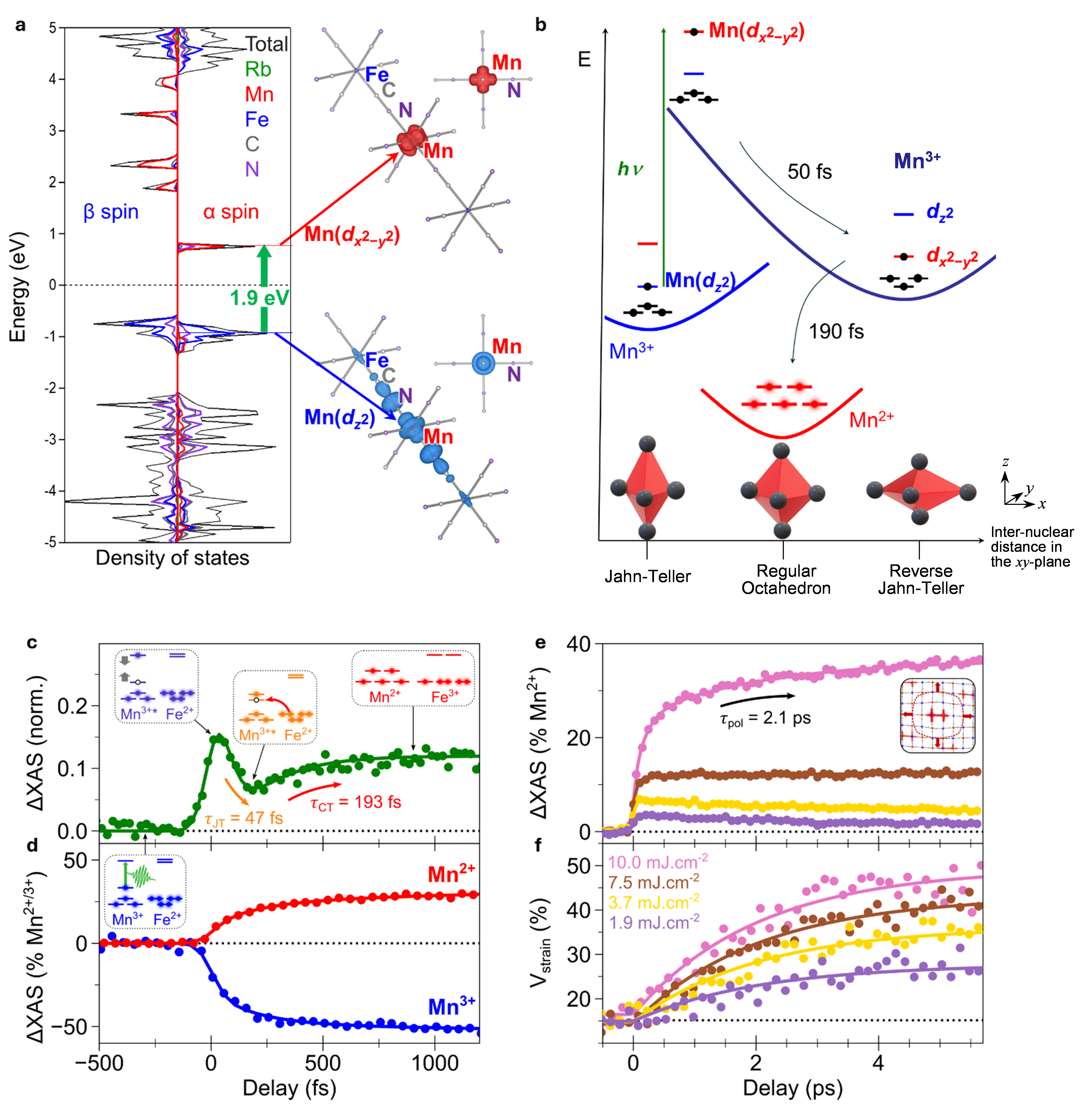 Figure 2: Process of ultrafast stabilization of charge-transfer polarons
(a) Computational results showing how the electronic state of a manganese atom changes upon light irradiation. A transition from Mn(dz²) to Mn(dx²−y²) appears near 1.9 eV. (b) Schematic diagram of the process in which the surrounding structure of the Mn³⁺ ion changes from a vertically elongated shape (Jahn-Teller) to a flattened contracted shape (reverse Jahn-Teller) due to photoexcitation, and subsequently transitions to the stable Mn²⁺ state via charge transfer. (c) Changes in X-ray absorption signals in the extremely short time scale immediately following light irradiation. (d) Time evolution of X-ray absorption signals corresponding to Mn components with different electronic states. The inset shows the change in electronic configuration over time. (e) Time response of the electronic state of Mn when the light intensity is varied. (f) Time evolution of the crystal strain arising after light irradiation. Solid lines show the analytical approximation curve.

Figure 3: Schematic diagram of the multiscale mechanism of the photoinduced phase transition in Rb0.94Mn0.94Co0.06[Fe(CN)6]0.98·0.2H2O
(a) In the LT phase crystal, light irradiation first causes deformation of the local structure, resulting in a structural change (reverse Jahn-Teller distortion) where the coordination geometry around Mn becomes flattened. This is accompanied by a local charge transfer from Fe2+ to Mn3+. (b) As a result, a microscopic state in which charge and lattice strain are integrated (charge-transfer polaron) is formed; this stabilizes while interacting with the surrounding crystal structure, thereby promoting further charge transfer. (c) Next, as a new crystal phase forms and grows locally, the strain within the crystal gradually increases. (d) Subsequently, the accumulated strain is released as the entire crystal expands, and (e) ultimately, the entire crystal reaches a new, uniform stable state.
Information on Presenters and Researchers
The University of Tokyo
Graduate School of Science, Department of Chemistry
Professor Shin-ichi Ohkoshi
Concurrently: Director, CNRS International Research Laboratory DYNACOM
Concurrently: Professor, Cryogenic Research Center, The University of Tokyo
University of Tsukuba
Faculty of Pure and Applied Sciences, Department of Materials Science
Professor Hiroko Tokoro
Concurrently: CNRS International Research Laboratory DYNACOM
University of Rennes
Institut de physique de Rennes
Professor Eric Collet
Concurrently: Vice Director, CNRS International Research Laboratory DYNACOM
Dr. Marco Cammarata
Concurrently: CNRS International Research Laboratory DYNACOM
Publication Information
-
Journal Nature Materials Title Multiscale phase nucleation driven by photoinduced polarons in a volume-changing materialAuthors Marius Hervé*, Gaël Privault, Serhane Zerdane, Shintaro Akagi, Leland B. Gee, Ryan D. Ribson, Matthieu Chollet, Shin-ichi Ohkoshi, Hiroko Tokoro, Marco Cammarata, Eric Collet* (* Corresponding authors) DOI 10.1038/s41563-026-02521-w
Research Fundings
This research was supported by JSPS Grants-in-Aid for Scientific Research A (Grant Number: 25H00866) and Grants-in-Aid for Scientific Research B (Grant Number: 22H02046), JST Advanced Carbon-Neutral Technology Development (ALCA-Next) (Grant Number: JPMJAN23A2) and FOREST Program (Grant Number: JPMJFR213Q), Quantum Leap Flagship Program (Q-LEAP) (Grant Number: JPMXS0118068681), and the CNRS International Research Laboratory DYNACOM.
Glossary
(Note 1) CNRS International Research Laboratory DYNACOM (Dynamical Control of Materials) An international research organization established in 2022 by the French National Center for Scientific Research (CNRS), the University of Tokyo, and the University of Rennes to study the ultrafast dynamics of optical phase transitions. It conducts research in collaboration with the European Synchrotron Radiation Facility (ESRF) and the Swiss X-ray Free-Electron Laser Facility (SLF). In this study, research was conducted in collaboration with the SLAC National Accelerator Laboratory in USA and the European Synchrotron Radiation Facility (ESRF).
(Note 2) X-ray free-electron laser An X-ray source that generates ultra-bright, ultra-short pulses by accelerating an electron beam at high speeds. It enables high-precision observation of structures at the atomic and molecular scales as well as ultrafast phenomena, and is used in a wide range of fields including materials science, physics, chemistry, and life sciences.
(Note 3) Rubidium-manganese-iron Prussian blue RbMn[Fe(CN)6] Rubidium-manganese-iron Prussian blue (RbMn[Fe(CN)6])—a compound first reported by Ohkoshi et al. in 2002—is a type of cyanido-bridged metal complex known as Prussian blue. It has attracted attention as a material that exhibits phase transitions in response to various stimuli, such as temperature, light, heat, and pressure [S. Ohkoshi, et al., J. Phys. Chem., 106, 2423 (2002), H. Tokoro, et al., Inorg. Chem., 43, 5231 (2004)]. In this study, the compound Rb0.94Mn0.94Co0.06[Fe(CN)6]0.98·0.2H₂O was used, where a portion of the manganese (Mn) in the compound has been substituted with cobalt (Co).
(Note 4) Charge-transfer polaron A quasiparticle state in which the charge transfer state generated by electron transfer and the local lattice distortion surrounding it behave as a single entity.
(Note 5) Jahn-Teller distortion and reverse Jahn-Teller distortion These are local structural distortions that arise to resolve the degeneracy of electronic states; Mn ions are known to typically exhibit the Jahn-Teller distortion. When based on an octahedral coordination structure, the Jahn-Teller distortion results in an elongated octahedron, while the reverse Jahn-Teller distortion results in a flattened, squashed octahedral structure.
(Note 6) Mn3+-Fe2+ phase (LT phase) and Mn2+-Fe3+ phase (HT phase) Rb0.94Mn0.94Co0.06[Fe(CN)6]0.98∙0.2H2O adopts a tetragonal crystal structure at low temperatures with the charge state –Mn3+–N≡C–Fe2+–, but as the temperature rises, a charge-transfer phase transition occurs, resulting in a cubic crystal structure with the charge state –Mn2+–N≡C–Fe3+–. These states are referred to as the Mn3+-Fe2+ phase (LT phase) and the Mn2+-Fe3+ phase (HT phase), respectively.
(Note 7) Mn K-edge The energy level at which the inner-shell electrons (K-shell) of a manganese atom are excited by X-ray absorption; in X-ray absorption spectroscopy, this is used to sensitively investigate the electronic states and valence changes of manganese.