
DATE2026.06.11 #News
EIC Resource Review Board meeting (RRB) held in Japan for the first time
The University of Tokyo, RIKEN, and the Ministry of Education, Culture, Sports, Science and Technology (MEXT) jointly hosted the meeting, highlighting Japan's EIC promotion framework and international collaboration.
On June 9-10, 2026, the Resource Review Board (RRB), meeting for the Electron-Ion Collider (EIC: Electron-Ion Collider) project was held at the Ministry of Education, Culture, Sports, Science and Technology (MEXT) in Tokyo. The meeting was jointly hosted by the University of Tokyo, RIKEN, and MEXT, marking the first time that the EIC RRB meeting was held in Japan.
The meeting brought together approximately 60 participants, including representatives from the U.S. Department of Energy (DOE), Brookhaven National Laboratory (BNL), Thomas Jefferson National Accelerator Facility (Jefferson Lab/JLab), and research institutions and funding agencies from various countries. Participants discussed the progress of the EIC project, the framework for international cooperation, and human and technical contributions from participating countries.
At the opening session, remarks were delivered by Mr. Takashi Fuchigami, Director-General of the Research Promotion Bureau at MEXT; Professor Hiroaki Aihara, Executive Director and Vice President of the University of Tokyo; and Professor Masashi Kawasaki, Executive Vice President of RIKEN. Director-General Fuchigami expressed expectations for the advancement of basic science, including the EIC, and for further international collaboration. Executive Director Aihara and Executive Vice President (RIKEN) Kawasaki introduced the current status and future prospects of Japan’s participation in the EIC project.
The EIC is a next-generation accelerator project that aims to explore the structure of matter and the origin of mass and spin by colliding electrons with protons and atomic nuclei with high precision and thereby investigating the behavior of quarks and gluons, the fundamental constituents of matter. The EIC is expected to greatly advance research in quantum chromodynamics (QCD), the fundamental theory of the strong interaction. It is also expected to play an important role as a next-generation scientific platform integrating AI, data science, advanced detector technologies, and large-scale computing.
Thirteen Japanese institutions are participating in the EIC project, including the University of Tokyo, RIKEN, Tohoku University, Yamagata University, the University of Tsukuba, Tsukuba University of Technology, Tokyo City University, Nihon University, Shinshu University, Osaka University, Nara Women’s University, Kobe University, and Hiroshima University. The Japanese EIC group is playing an important role in the EIC experiment by leading developments in advanced semiconductor detector technologies, streaming data acquisition systems, and large-scale data processing infrastructure.
As the central institution promoting EIC research in Japan, the University of Tokyo is leading Japan’s participation in the EIC in close collaboration with universities and research institutes across the country. To support this effort, the University of Tokyo established the Quark Nuclear Science Institute (QNSI), the Graduate School of Science, and has been developing an integrated framework for nuclear physics research spanning low- to high-energy regimes.
As a core institute of the Japanese EIC community, QNSI promotes Japan’s EIC strategy, physics research, advanced detector development, international collaboration, and the training of young researchers. With QNSI as its hub, the University of Tokyo is strengthening collaboration with domestic universities and research institutions participating in the EIC project. It is also promoting the International Quantum Physics Network (IQPN) through inter-university collaboration with the Research Center for Nuclear Physics (RCNP) at Osaka University and the Research Center for Accelerator and Radioisotope Science (RARiS) at Tohoku University.
The hosting of the RRB meeting in Japan provided an important opportunity to demonstrate Japan’s participation in the EIC project and its growing international presence. The University of Tokyo and QNSI will continue to serve as a core of the Japanese EIC community, further strengthening collaboration with domestic and international research institutions and contributing to the success of the EIC project as well as to the advancement of basic science, advanced technology, and human resource development.
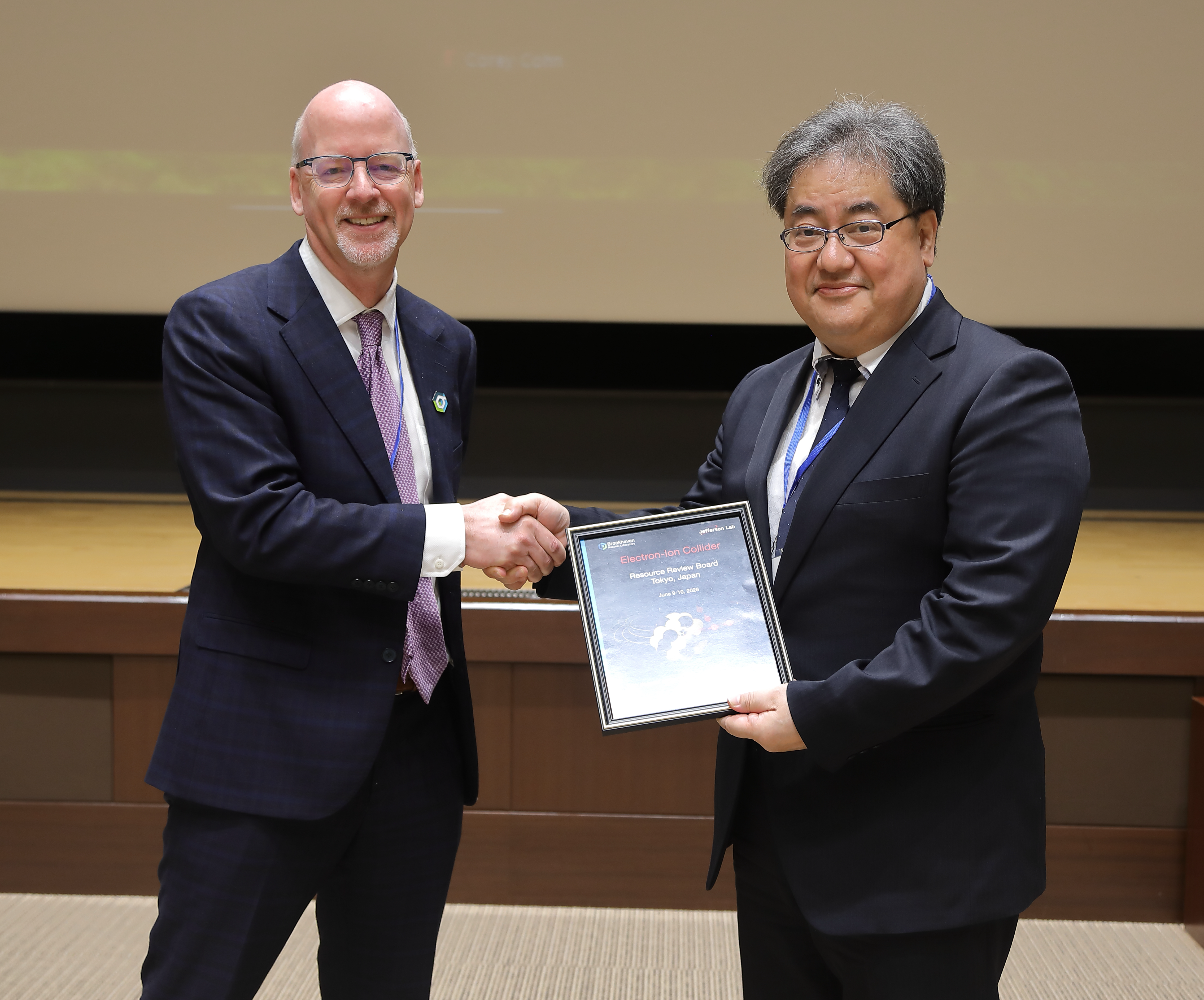
BNL Director J. Hill (left) and MEXT Director-General Fuchigami (right)
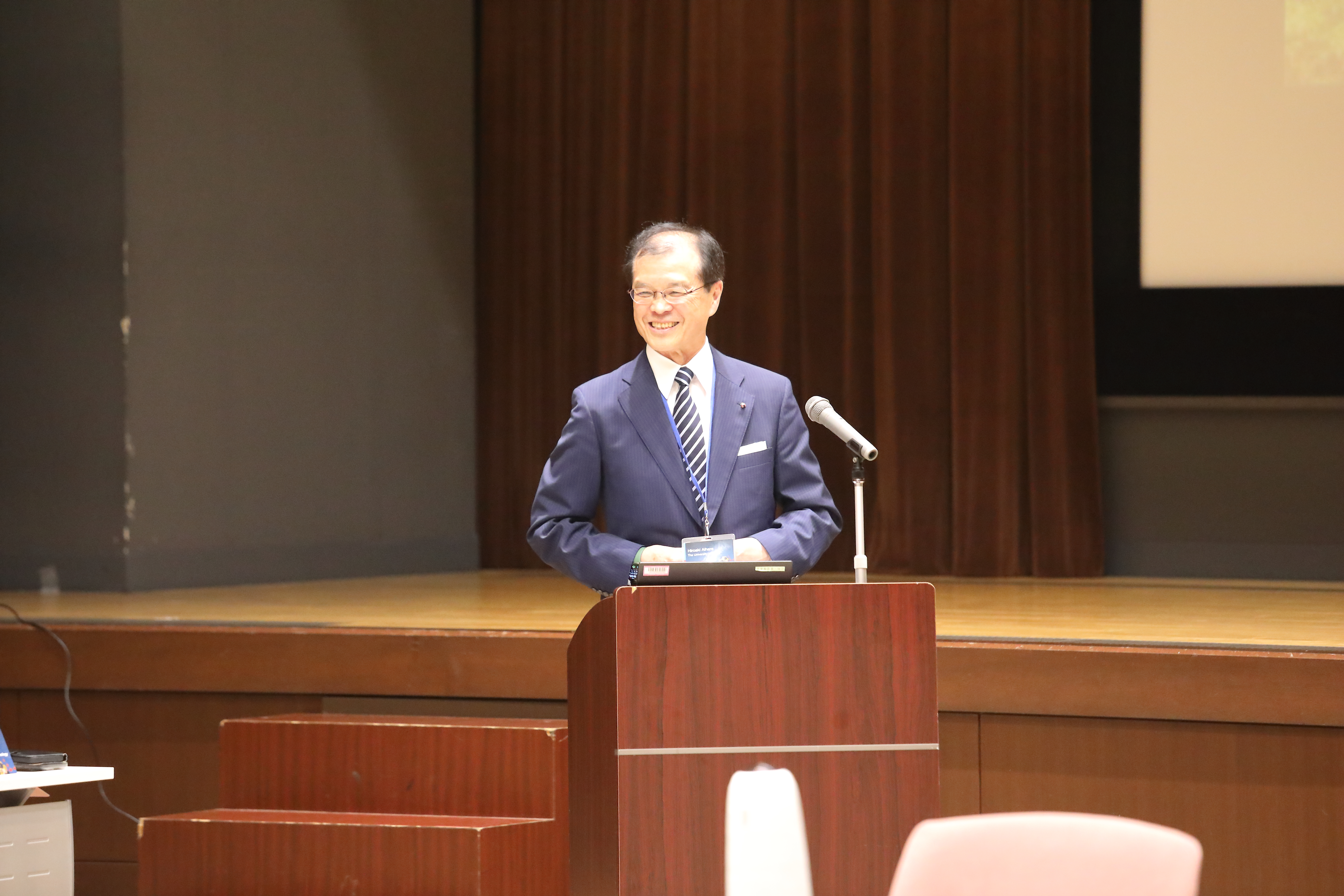
Prof. Hiroaki Aihara, Executive Vice President of the University of Tokyo, delivering welcoming remarks as a leading representative of Japan’s EIC initiative
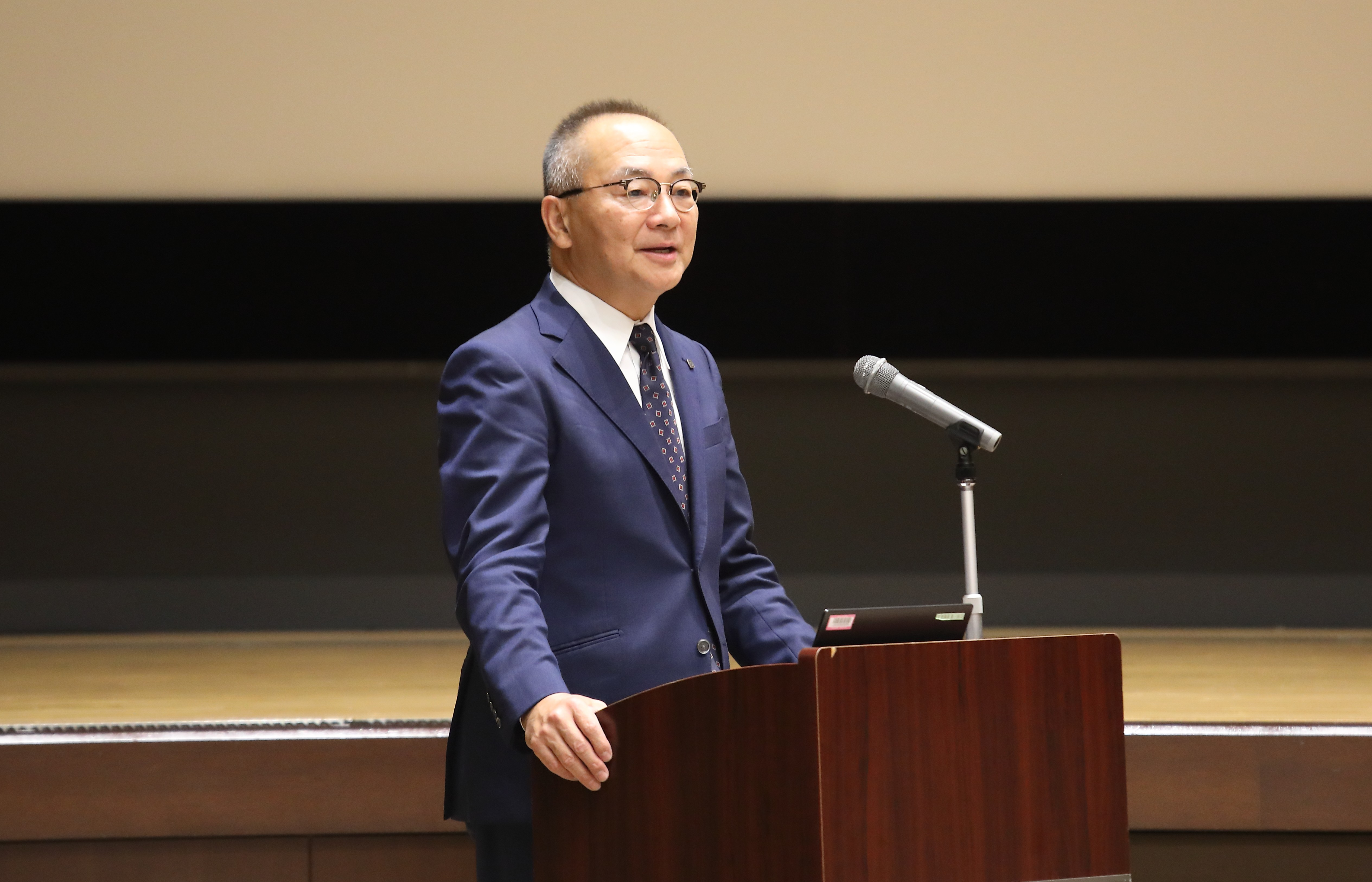
Masashi Kawasaki, Executive Vice President of RIKEN, introduced the current status of Japan’s participation in the EIC and its future prospects
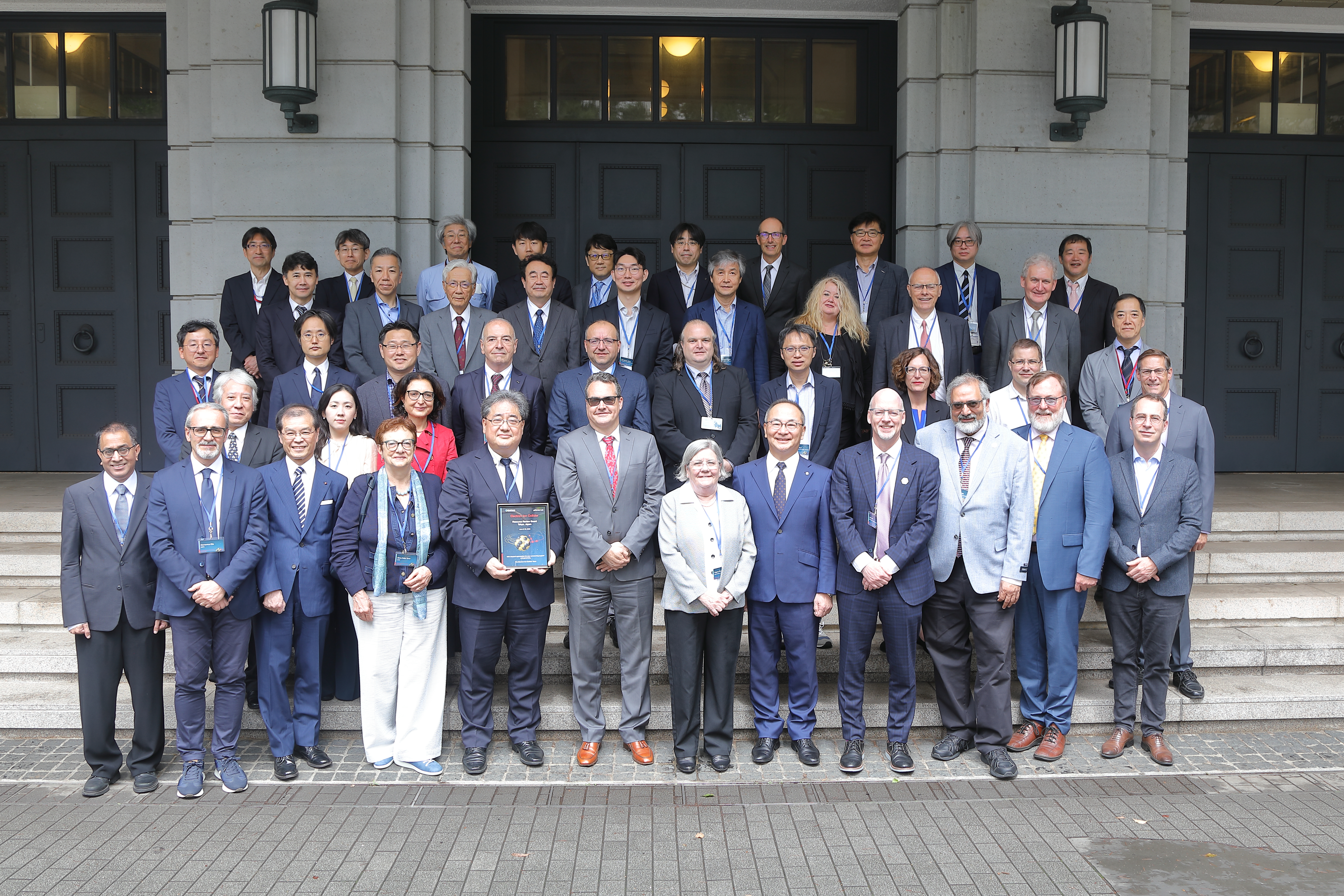
Group photo at the EIC-RRB meeting (Location: MEXT)
Conference Outline
- Name: Electron-Ion Collider (EIC) Resource Review Board (RRB) Meeting
- Date: Tuesday, June 9 - Wednesday, June 10, 2026
- Venue: Ministry of Education, Culture, Sports, Science and Technology (MEXT), Tokyo, Japan
- Co-organizers: MEXT, The University of Tokyo, RIKEN
- Participating organizations: U.S. Department of Energy (DOE), Brookhaven National Laboratory (BNL), Thomas Jefferson National Accelerator Facility (JLab), research institutes and funding agencies in various countries, etc.
- Reference URL: EIC RRB Meeting Official Website
Explanation of Terms
Electron-Ion Collider (EIC): A next-generation accelerator that collides electrons, protons, and nuclei with high precision. It is expected to dramatically advance our understanding of quantum chromodynamics (QCD), which describes the structure of quarks and gluons and the strong force. ↑up
Resource Review Board (RRB): International steering and resource coordination board for the EIC program. Research institutes, funding agencies, and experimental participating organizations from each country participate to discuss human, technical, and financial contributions, as well as the progress of the project. ↑up
Affiliated Parties
Graduate School of Science, The University of Tokyo
Quark and Nuclear Science Institute (QNSI), The University of Tokyo